Early Childhood Education in Australia: Study and Career Pathways
Compare early childhood teacher and educator pathways in Australia, including qualifications, fees, English requirements, professional recognition and career options.
Owen & Co. Advisory Team · 6 min read
Published 01/11/2026
Drafted with AI assistance and edited by the Owen & Co. team.
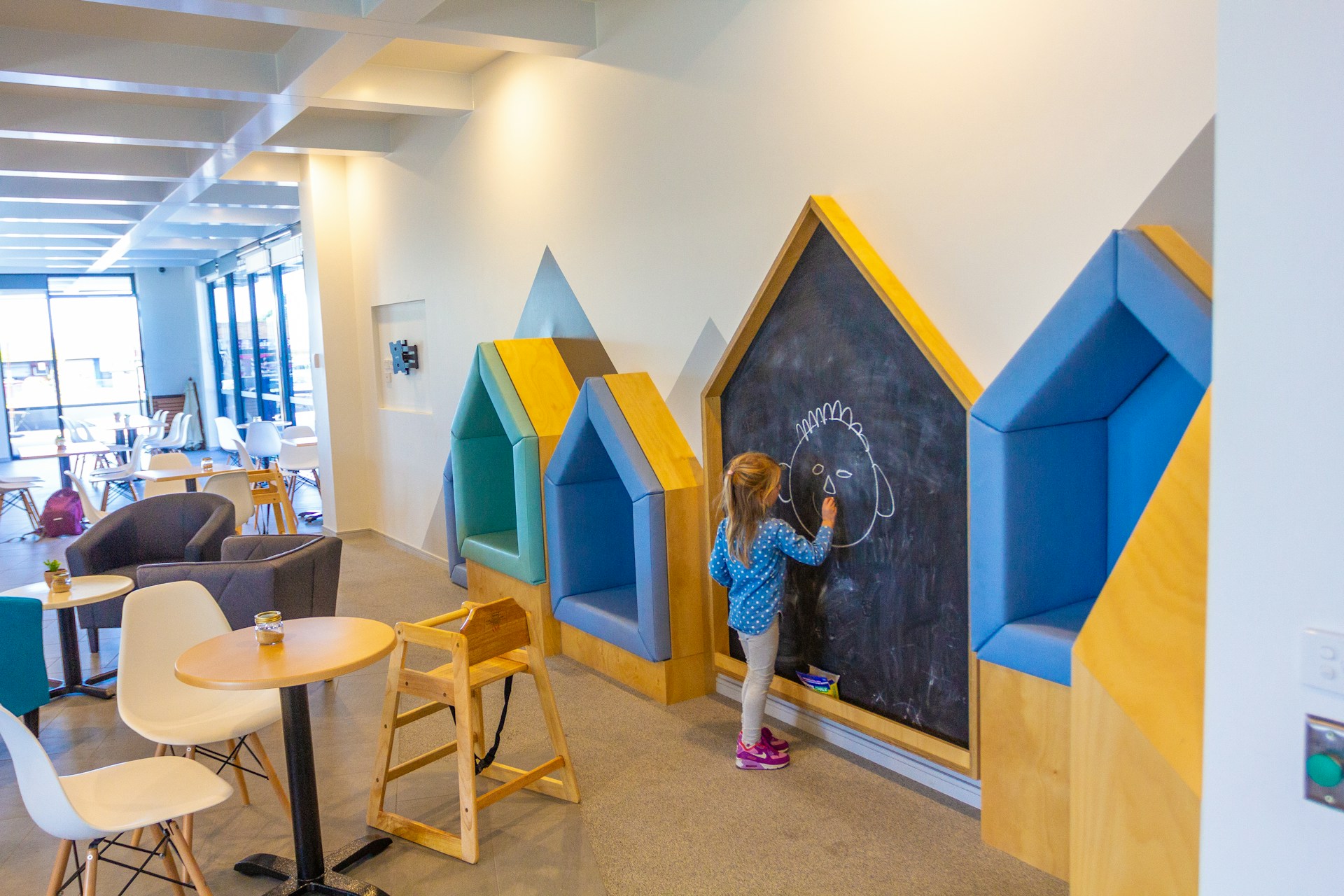
Photo: DJ Paine/Unsplash.
Early childhood education can be a rewarding choice if you enjoy helping young children learn and grow. It also involves much more than being comfortable around children: there is planning, documentation, safety, teamwork and regular communication with families.
Before choosing a course in Australia, decide which role you want to prepare for. The difference between an educator and a teacher affects the qualification you need and the professional steps that follow.
Educator and teacher are different roles
| Question | Early Childhood Educator | Early Childhood Teacher (ECT) |
|---|---|---|
| Role | Care, developmental support and learning activities | Teaching, curriculum planning and assessment |
| Typical qualification | An appropriate Certificate III or Diploma | A recognised early childhood teacher qualification |
| What to check | A Diploma does not automatically lead to ECT status | State teacher registration may also be required |
Both roles contribute to children's learning, but they have different responsibilities and qualification requirements. A Diploma does not automatically qualify you as an Early Childhood Teacher (ECT).
Typical study includes child development, play-based learning, inclusion, observation, assessment, child protection and supervised placements. The balance depends on the program.
Choose the right qualification pathway
A Certificate III followed by a Diploma commonly prepares students for educator roles. If you later want to progress, check credit-transfer arrangements rather than assuming every unit will count.
A recognised Bachelor of Early Childhood Education may suit a school leaver or an eligible transfer student. Some Graduate Diplomas and master's programs provide ECT preparation for applicants with an appropriate previous degree. Others focus on education without qualifying graduates to teach.
Look up the exact qualification and institution on ACECQA's approved list. Professional recognition, CRICOS registration and visa eligibility are separate checks.
Understand the different English requirements
There is no single GPA or English score for the whole field. Check the course's entry requirements, including whether it accepts graduates from outside education.
The Victoria University master's example linked below specifies IELTS 7.0 overall, 7.5 in Listening and Speaking, and 6.5 in Reading and Writing for the relevant applicant group. Those are program-specific requirements.
Teacher registration and migration skills assessment can use different standards. In Victoria, applicants required to use IELTS for VIT registration need 8.0 in Listening and Speaking and 7.0 in Reading and Writing under the cited guidance. Where you completed your training also matters.
ACECQA's assessment guidance accepts other evidence in specified circumstances, including at least one year of full-time tertiary study in designated countries where the rules are met. An exemption from a test does not remove the practical need to communicate clearly with children, colleagues and parents.
Plan for the costs around the course
The TAFE NSW examples in the 2026 guide are:
| Program | Listed duration | Listed course fee |
|---|---|---|
| Certificate III | 1 year | AUD 12,500 |
| Diploma | 1 year | AUD 17,000 |
| Bachelor of Early Childhood Education and Care | 4 years | AUD 62,080 |
These are specific course prices, not field-wide averages or 2027 quotations. Add living costs, OSHC, visa fees, checks, certificates and placement travel. Do not assume placements are paid or that you can maintain your usual part-time shifts during them.
The linked official guidance describes the usual Student visa limit of 48 work hours per fortnight while a course is in session, with no limit during scheduled breaks, subject to your visa conditions. Employment in a childcare setting also depends on meeting the role's qualification and safety requirements.
Know what the work requires
Depending on the role and location, checks can include a Working with Children Check or equivalent, teacher registration, child protection training, and first aid, anaphylaxis and asthma preparation. The source also refers to role-specific national training through Geccko. Check your employer's and regulator's requirements rather than relying on a universal checklist.
The work can be physically and emotionally demanding. You may be helping with hygiene, supervising continuously and discussing sensitive concerns with families. Exploring the day-to-day reality will help you judge whether the profession suits you.
Keep career demand and residence eligibility separate
The cited Jobs and Skills Australia report identifies strong demand and job growth for ECTs. That supports researching the profession, but does not guarantee a job or permanent residence for an individual graduate.
An approved qualification does not automatically qualify you for a subclass 485 visa. You must also check age, study, visa history and stream requirements. A residence plan may involve an eligible occupation, skills assessment, English and further visa criteria.
Does one state award more points?
| Visa category | Nomination points, where eligible |
|---|---|
| Subclass 190 | 5 points |
| Subclass 491 | 15 points |
The five points for subclass 190 and 15 for subclass 491 come from federal rules for different visa categories. They are not state-specific bonuses and cannot be added together as 20 points for one application.
States differ in nomination priorities and selection requirements. The source notes Victoria's encouragement for eligible ECTs to explore nomination, with 2026–27 program criteria and opening dates to check. Choose a location that fits your registration, employment and budget as well as any nomination opportunity.
Owen & Co. Education can help you compare qualifications and identify which professional and visa questions to resolve before paying tuition.
Sources and further reading
- Owen & Co. Education
- preschool human resource structure
- Refer to Victoria University's program
- types of ECT training degrees
- Look for ACECQA-accredited degrees
- VIT
- ACECQA FAQ
- TAFE NSW International Student Guide 2026
- Study Australia
- child safety reform
- ACECQA
- Australian Department of Education
- ACECQA
- JSA report
- visa 485
- Scoreboard 190
- scoreboard 491
- Victorian Government
- program update
Frequently asked questions
Does an early childhood Diploma qualify me as an ECT?
Not automatically. A Diploma commonly leads towards educator work. Becoming an ECT requires an appropriate recognised teaching qualification or an accepted equivalent assessment.
Can I enter early childhood teaching after another degree?
Some Graduate Diploma or master's pathways accept suitable graduates. Check entry requirements, ACECQA recognition and visa eligibility separately.
Does everyone need IELTS 8.0?
No. Admission, registration and skills-assessment requirements differ. The evidence needed depends on the authority, training location and pathway you use.
Does regional study guarantee permanent residence?
No. A study location does not automatically create nomination or residence eligibility. Subclass 491 is provisional and has its own conditions and later pathway requirements.
Does ACECQA approval mean a course qualifies me for a 485 visa?
No. Professional recognition and graduate visa eligibility are separate. Check your age, qualification, study history and the relevant visa stream.